Acoustic sealed-unit double glazing: your guide
If you live near a busy road, railway line or flight path, the level of external noise that enters your home may be something that you’re acutely aware of – and would like to reduce

Acoustic sealed double-glazed units are specifically designed to reduce unwanted outside noise, whilst also offering your home excellent thermal efficiency.
Unlike standard double glazing, these specialist units are constructed with a specific configuration of glass type, thickness and spacing, to significantly improve sound insulation.
In this guide, we’ll explain how acoustic sealed double glazing works, how it differs from standard units and the benefits it offers – to help you decide whether it’s the right choice for your home.
What are acoustic sealed double-glazed units?
Acoustic sealed double glazing units are specially engineered insulated glass units (IGUs), which are designed to reduce the amount of sound that passes through a window.
Like all sealed double-glazed units, they consist of two panes of glass separated by a spacer bar and sealed around the edges to create an insulating cavity.
Their difference lies in the glass specification and configuration. Most acoustic double glazing units include:
- Laminated acoustic glass on at least one pane
- Different glass thicknesses to disrupt sound frequencies
- The optimum space between the panes to interrupt sound waves
- High-quality seals to maintain their performance
Together, these features help reduce external noise far more effectively than standard double glazing.
How does acoustic double glazing reduce noise?
Noise travels through vibrations (sound waves). Standard glass allows many of these vibrations to pass into our homes.
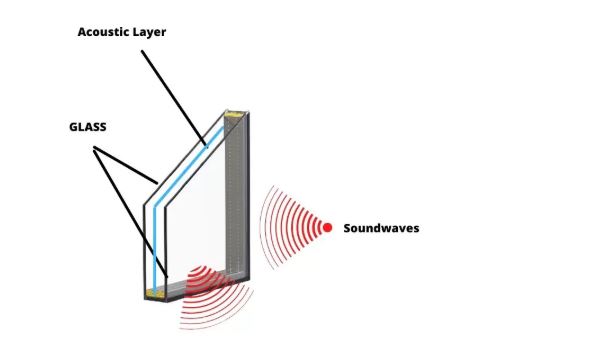
Noise reducing double glazing works by interrupting sound waves before they reach the interior.
Acoustic units achieve this through several design features:
Laminated acoustic glass
One pane often incorporates laminated glass made from two sheets of glass bonded with a specialist acoustic interlayer, typically made of Polyvinyl Butyral (PVB). This flexible layer absorbs and dampens sound vibrations, significantly reducing the transmission of noise.
Different glass thicknesses
Using panes of varying thickness helps to disrupt a wider range of sound frequencies. If both panes are identical, they tend to resonate at similar frequencies, reducing effectiveness.
Sealed air or gas cavity
The space between the panes acts as an additional sound barrier. The width of this cavity influences how well the unit performs against different types of noise.
Quality of installation
Proper installation is critical to the performance of your windows – gaps or poor sealing can undermine the soundproofing capabilities of acoustic double-glazed windows.
Acoustic double glazing vs standard double glazing
The key differences between these high-performance products:
| Standard double glazing | Acoustic double glazing |
|---|---|
| Primarily designed for thermal insulation | Designed for both thermal and acoustic performance |
| Identical glass thickness | Often uses different glass thicknesses for sound disruption |
| Standard glass | Laminated acoustic glass |
| Basic noise reduction | Significantly improved sound insulation |
| Suitable for most homes to improve insulation and energy efficiency | Ideal for homes where higher noise levels are a concern |
How effective are acoustic double glazing units for noise reduction?
Acoustic sealed double-glazed units can significantly reduce external noise compared with standard double glazing.
Acoustic glazing is usually rated using its Rw (Weighted Sound Reduction Index). The higher the Rw value, the better the window is at reducing airborne sound under laboratory conditions.
The noise-reduction impact of acoustic double glazing also depends on factors including:
- The type of external noise
- Glass specification
- Air gap between panes
- Quality of the window frame
- Quality of the installation
Properly specified acoustic glazing can reduce perceived external noise by a significant amount, making conversations, television viewing and sleeping much more comfortable.
It’s worth remembering that windows are only one part of your home’s sound insulation. Doors, walls, trickle vents and other openings can also allow noise to enter.
Frequently asked questions
What types of noise can acoustic glazing help reduce?
Acoustic glazing is particularly effective in reducing external sound from:
- Road traffic
- Aircraft noise
- Railway lines
- Neighbourhood noise
- Schools and playgrounds
- Commercial premises
- Construction activity
Can acoustic units replace existing double glazing?
If your window frames are in good condition, you may be able to replace sealed double glazing units without replacing the entire window. This could improve both thermal efficiency and noise reduction. However, you should bear in mind that, if the frames are not of a high quality, or the originally installation was poor, you may not realise the full benefits.
We always recommend a full window replacement to ensure that you’re getting the best results, both in terms of noise reduction and energy efficiency.
What’s the difference between standard and acoustic double glazing?
Standard double glazing focuses primarily on thermal efficiency. Acoustic glazing is engineered to reduce noise by combining laminated glass, variable glass thickness and specific cavity spacing.
What is the best thickness for acoustic double glazing?
There isn’t one particular thickness that’s best – the recommended specification will depend on the type of noise you’re trying to reduce along with other factors unique to your property.
A glazing specialist such as Window Wise will be able to recommend the most effective approach for your home.
Can acoustic double glazing completely soundproof a room?
Acoustic glazing can significantly reduce external noise, but cannot eliminate it entirely. Sound insulation also depends on walls, doors, ventilation and the quality of installation.
Are acoustic double glazing units worth it?
For many homeowners, the answer is yes. Acoustic glazing can provide benefits including:
- A quieter, more comfortable living environment
- Better sleep quality
- Reduced distractions when working from home
- Improved thermal efficiency
- Enhanced security when laminated glass is used
Whilst acoustic units generally cost more than standard double glazing, many homeowners consider the improvement in comfort and quality of life well worth the investment.
Choosing the right acoustic sealed units for your home
Acoustic sealed double-glazed units offer an effective way to reduce unwanted outside noise whilst also achieving the energy efficiency of modern double glazing.
Because these units are constructed with the optimum combination of laminated acoustic glass, specified pane thickness and spacing, there is no single solution that’s suitable for every property.
The best acoustic sealed unit will depend on a number of factors such as:
- The main source of external noise
- The distance between your property and the noise source
- The existing window frames
- Your budget
- Any planning or conservation area requirements
For example, a home overlooking a busy road may benefit from a different glass specification than a property mainly affected by a nearby school or occasional neighbourhood noise, as different sound frequencies require different glazing solutions.
Our expert advice is on hand
We can recommend the most appropriate combination of glass thickness, cavity spacing and laminated glass for your unique requirements.
Please call us on 01444 45 71 45 or visit our Haywards Heath showroom for more information about acoustic double-glazed units.